Application Instructions
Step-by-step guidance for applying FiverPatch UV for permanent repairs.
Before you Begin (Materials + Safety)
Materials Needed
Clean cloth
Solvent
Sandpaper
Scissors or utility knife
Roller
UV lamp or sunlight
Safety glasses
Surface Prep Notes
Surface must be clean and dry
Abrade at least 1½" beyond damage
Remove all gloss or texture
Wipe away dust
Step-by-Step Application Instructions
Follow these steps to apply FiberPatch UV (White or Clear).
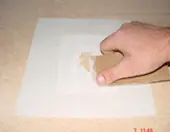
Clean and Abrade the Repair Area
Remove all contaminants with a clean cloth. If needed, wipe with solvent (acetone, xylene, or toluene) and allow the surface to dry completely before proceeding. Sand or grind the repair area, extending at least 1½” beyond the damage. Remove gloss or texture until the surface has a uniform, abraded appearance, then blow or wipe away dust.
Optional Backside Support
If you can access the backside of the repair, apply masking or packing tape to to provide support and hold loose edges together. This helps stabilize the area and improves adhesion but is not required.
Open the Patch Package
Open the pouch only after the surface is fully prepared. FiberPatch begins to cure as soon as it is exposed to UV light.
Unopened pouches have a shelf life of about one year.
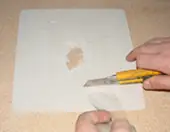
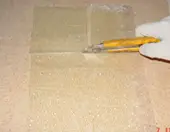
Cut the Patch to Size
Use scissors or a sharp utility knife to cut the patch slightly larger than the damaged area. Return any unused material to the pouch and reseal it inside a can or zip‑top bag to slow drying.
Remove Nylon Film & Apply
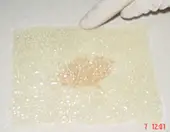
Choose the smooth or textured side depending on the final finish you want. Peel the nylon film from the side that will contact the surface. Place the exposed resin side onto the clean, dry, abraded surface, ensuring full coverage of the repair area.
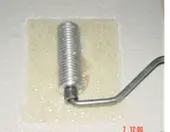
Work Out the Resin
Using a roller or your gloved fingers, press from the center of the patch outward until a small bead of resin appears around the edges. This helps remove air pockets and ensures full contact.
(Optional) Apply clear packing tape around the perimeter before curing and smooth the resin bead with your finger.
Note: Resin exposed to air when curing will be tacky, wipe with acetone/MEK.
Cure the Patch
Expose the patch to direct sunlight or a UV curing lamp until it becomes hard and cannot be dented with a fingernail.
With UV lamps, cure times are usually 1-5 minutes depending on lamp type and distance.
Curing with Sunlight usually takes 10-15 minutes.
Final Steps
Remove any tape used around the perimeter.
If any exposed resin feels tacky but the patch is hard, wipe it with acetone on a clean white rag.
Once cured, the patch can be painted with an exterior‑grade acrylic urethane or acrylic enamel if desired.
Download Application Instructions
Get the complete FiberPatch UV application guide in a printable PDF.
Example Repairs